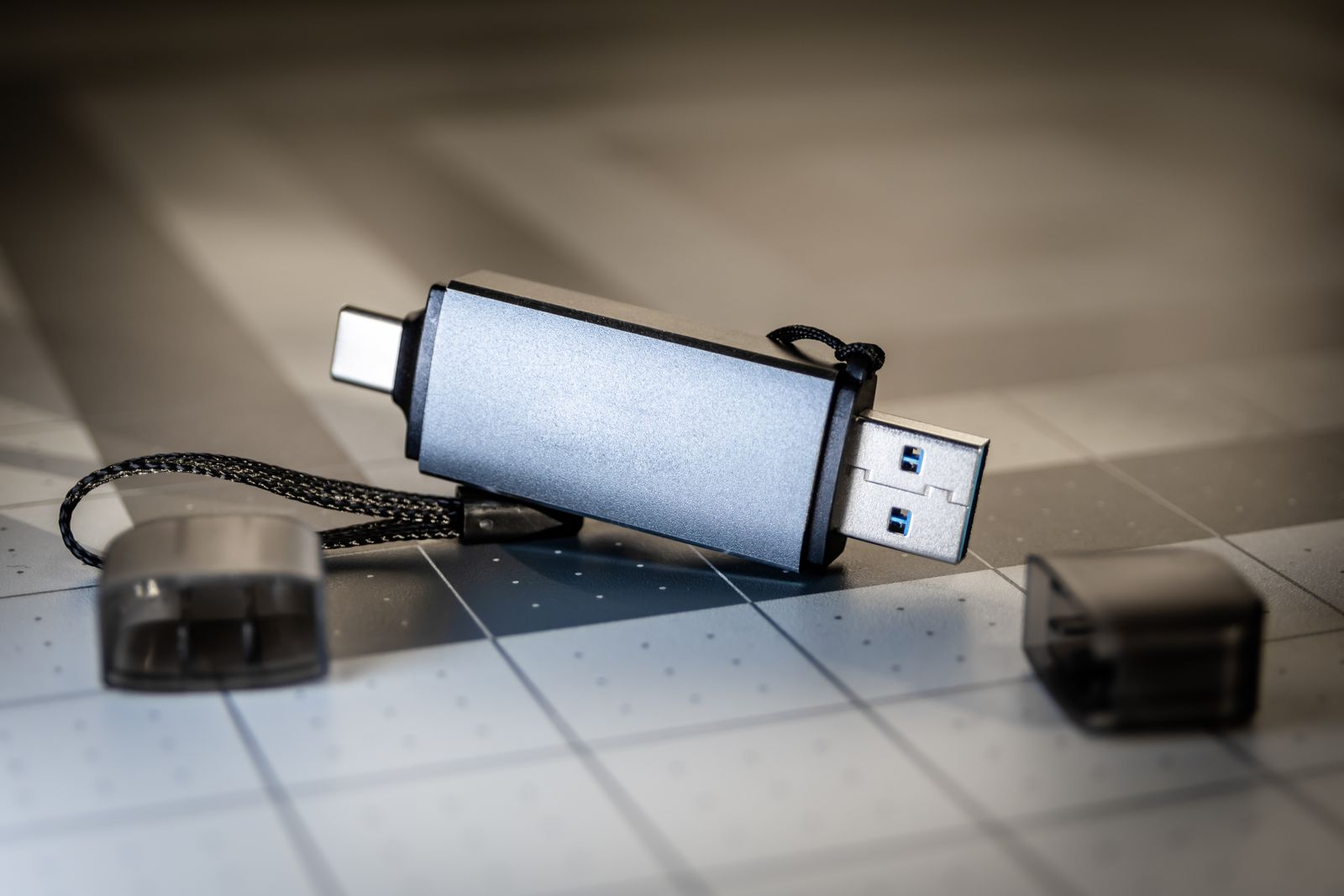
There is a Home Assistant Connect ZBT-2 plugged into the back of my EliteDesk. By most measures it is the best Zigbee coordinator you can buy in 2026. It is not coordinating a single Zigbee device in this house.
It is running Thread. That is a deliberate choice, and it is the choice that quietly decides how much you should spend on a Zigbee stick — because of one sentence buried in the ZBT-2’s FAQ that most buying guides mention and then walk straight past.
The sentence that decides the purchase
From Nabu Casa’s own product page: “Connect ZBT-2 cannot do both Zigbee and Thread simultaneously.” They go further. They tested multiprotocol (MultiPAN) thoroughly on the ZBT-1, found it inconsistent and a frequent cause of device instability, and say plainly they do not plan to implement it. One radio, one protocol, dedicate the hardware.
I want to be clear that I think this is the right call and not a cop-out. Multiprotocol on a single 802.15.4 chip means time-slicing two mesh networks that both assume they own the radio. When it goes wrong it goes wrong as “my motion sensor is sometimes slow,” which is the single worst failure mode in home automation because you cannot prove it is happening. I would rather buy a second stick than debug that.
But it changes the maths. If you want Zigbee and Thread — and by late 2026, most of us who bought anything Matter-shaped in the last two years do — you are not buying one coordinator. You are buying two radios, and the second one has to live somewhere.
What the ZBT-2 actually improved
Worth being precise here, because this device gets described as a generational leap and it is more specific than that.
The ZBT-1 — you may remember it as SkyConnect — launched in 2022 and is now discontinued. The ZBT-2 replaces it with a Silicon Labs MG24 in place of the MG21, and swaps the CP2102N USB bridge for an ESP32-S3. The headline number is the serial link: 115200 baud on the ZBT-1, 460800 on the ZBT-2. Four times faster, and that is a real improvement in how quickly a busy mesh drains its queue, not a spec-sheet flourish.
The part I care about more is physical. The ZBT-1 had a small internal antenna. The ZBT-2 is a 164 mm antenna on a weighted base with 4.16 dBi peak gain, transmitting at 10 dBm in Europe. The device is genuinely large, and Nabu Casa’s answer to “why is it so big” is basically “because 2.4 GHz is physics.” They are right, and it is refreshing to see a vendor say so instead of pretending the antenna is a design feature.
MSRP is $49 / €45. In Switzerland it turns up through the usual EU channels and at least one local shop, and by the time it lands here it is closer to the top of that range than the bottom. It is still not expensive for a component that every battery sensor in your house depends on.
The Zigbee2MQTT wrinkle nobody warns you about
Yes, the ZBT-2 works with Zigbee2MQTT. No, it does not necessarily work with Zigbee2MQTT out of the box.
Units ship with an older EmberZNet build, and Z2M’s ember driver expects something newer. Plug it in, point Z2M at it, and you get a coordinator that refuses to talk — which reads like dead hardware if you do not know to check the firmware version. The fix is not hard: Home Assistant’s onboarding wizard will flash the right firmware if you let it, and you then tell Z2M to use the custom adapter path with the baud rate set to 460800. Miss that last number and you are back to silence.
This is the sort of thing that should be in the box’s quickstart guide and is instead in a support article. If you are coming from a Sonoff dongle and expecting plug-and-play parity, budget twenty minutes.
Where the radio goes matters more than which radio it is
Here is the unglamorous truth I keep coming back to: the difference between a good coordinator and a great one is small compared to the difference between a coordinator ten centimetres from an NVMe drive and one two metres away from it.
USB 3.0 radiates broadband noise that lands squarely in 2.4–2.5 GHz. This is not folklore — Intel documented it in a white paper back in April 2012 (document 327216-001, still hosted on usb.org), and the crucial detail is that the noise sits inside the band your Zigbee receiver is listening to, so no filter can remove it. It just raises the noise floor and eats your receive sensitivity.
A mini PC is close to a worst case: SSD, USB 3 ports, and a metal chassis all within a few centimetres of wherever you plugged the stick. The ZBT-2 ships with a 1.5 m USB-C cable and a base precisely so you do not plug it directly into the machine. Use them. If you only take one thing from this post, take that.
Which brings me to the other option. The ZBT-2 has no PoE, and Nabu Casa is upfront that this was a design decision rather than an oversight — they call PoE “a cool technology” that did not fit this product’s goals, note they shipped experimental PoE firmware for the ZWA-2 Z-Wave adapter, and say there is no PoE ZBT-2 planned. Fine. But the moment you have a PoE switch in the house, an Ethernet-attached coordinator like SMLIGHT’s SLZB-06 series stops being a niche choice. One cable carries power and data, the radio can sit in the middle of the house instead of wherever the server rack happens to be, and USB noise stops being part of the conversation entirely.
The SLZB-06 line splits by chip: the base SLZB-06 uses a TI CC2652P, which is the mature, well-trodden path for Zigbee2MQTT, while the SLZB-06M uses a Silabs EFR32MG21 and suits ZHA or a future Thread role. Both give you a web UI and over-the-air updates for the radio firmware, which is a comfort the USB sticks cannot match.
What I would actually buy
If you are starting from nothing and only need Zigbee: ZBT-2, on the supplied extension cable, into a USB 2.0 port. Done. The setup wizard is as easy as everyone says, migration from an old adapter is genuinely handled, and the open case and flashable firmware mean it is not a dead end.
If you already have a PoE switch: put the Zigbee radio on Ethernet and stop fighting your own server’s noise floor. This is what I would do differently if I were rebuilding today.
If you want Zigbee and Thread: accept that you are buying two radios. In my rack the ZBT-2 took the Thread job, because a vendor-neutral border router running inside Home Assistant OS — rather than an Apple or Google hub deciding what my Thread network is allowed to do — is worth more to me than four-times-faster Zigbee. My Zigbee mesh sits on its own coordinator, and neither network has to negotiate for airtime.
And if your Zigbee network is currently misbehaving: before you spend anything, move your existing stick two metres away from the machine on an extension cable and give it a week. It costs a few francs and it fixes this more often than a new coordinator does. I would rather tell you that than sell you an antenna.
One last note on the horizon: Nabu Casa say they are reviewing the Zigbee 4.0 spec and believe the ZBT-2 could be updated to support it, pending firmware plus Home Assistant support. That is a “believe,” not a promise. But it is a more honest answer than most hardware vendors give about a device they are still shipping.
Leave a Reply