For a long time I treated presence detection as a shopping problem. Find the right sensor, put it in the room, done. Every few months a new radar module or a new Aqara model would appear and I would wonder whether this was the one that finally made the lights stop turning off on me while I sit perfectly still reading.
It took me an embarrassingly long time to accept that there is no such sensor, because “is someone here” is not one question. I was reminded of this recently by a guide on Big Iron that frames presence as a stack rather than a winner. I do not agree with every detail, but the framing matches what I have learned the slow way, so here is my version of it.
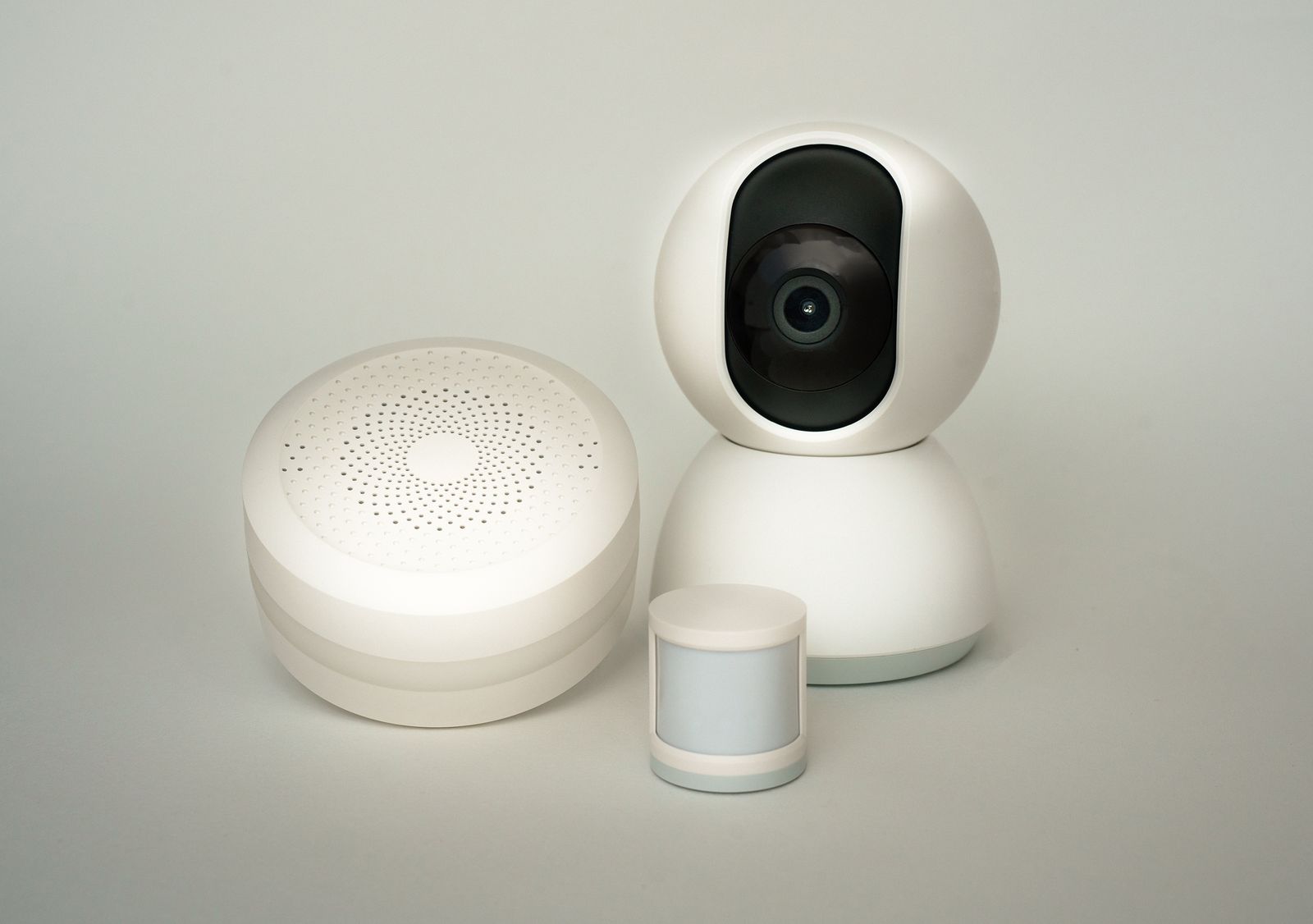
Three questions wearing one name
When I say “presence”, I actually mean one of three things. First: is someone in this room right now, even if they have not moved for twenty minutes? Second: which person is it, when more than one of us lives here? Third: is anybody home at all, or has the house been empty since the morning?
A PIR motion sensor answers none of these well. It answers “did something move a moment ago”, which is why every PIR-based automation eventually grows a timer, then a longer timer, then a second condition to cancel the timer. I have written that automation more times than I would like to admit.
Room presence: radar earns its place
For the first question, millimetre-wave radar is the first technology that actually fits. It picks up tiny movements like breathing, so a person on the sofa does not vanish after the PIR timeout. That is the whole reason to pay for it.
The options split along protocol lines, and I care about those more than spec sheets. According to the comparison on Smart Home Field Guide, the Aqara FP2 is Wi-Fi, mains-powered and reaches Home Assistant through the HomeKit Controller integration, while the newer FP300 is battery-powered, speaks Thread and Zigbee, and can join through Matter over Thread. The same page lists the Everything Presence One as a Wi-Fi ESPHome device that needs a little assembly. Treat the prices quoted there as a snapshot, they move constantly.
My own preference follows from the local-first rule I run the house by. A battery sensor on Thread or Zigbee can go anywhere, including places with no outlet, and keeps working when the internet is gone. A Wi-Fi device is fine too, as long as it is controlled locally and does not need a vendor account to function. If I were buying one tomorrow, the FP300-style battery radar would be the first thing I look at, mostly because wiring a USB cable to a ceiling corner is a chore I have already done once and did not enjoy.
If you like to tinker, the cheap route is a bare LD2410 or LD2450 radar module on an ESP32 with ESPHome. The Big Iron guide puts these at roughly ten and twenty dollars. You trade money for time: placement, sensitivity and the occasional false trigger from a ceiling fan or a pet become your problem to tune.
The part people skip: do not trigger on the raw sensor
This is the idea from that guide I found most useful. Radar is noisy in ways PIR is not. It sees the curtain move, it sees the cat, it occasionally sees nothing at all for a few seconds. If a light automation fires directly off the raw sensor, you will notice every one of those moments.
Home Assistant has a built-in answer, the Bayesian binary sensor. You feed it several observations, each with a probability of being seen when the room is occupied and when it is empty, and it computes a combined belief. A radar reading alone can be outvoted by, say, the phone being at home and the desk lamp being switched on. I am not going to claim it is magic, because you still have to pick sensible numbers, but it moves the flicker out of your automations and into one place you can tune.
Who is in the room, and who is home
For the second question, radar cannot help. It knows someone is there, not who. The usual answer is Bluetooth: small ESP32 receivers around the house with ESPresense or Bermuda. The guide is honest that iPhone address randomisation makes this fiddly, and I would add that it only becomes worth the effort when automations genuinely differ per person. In a two-person home, most of mine do not.
The third question, home or away, is the one I solved first and with the least hardware: the phone’s companion app, possibly together with the router seeing the device on Wi-Fi. It is coarse, and Wi-Fi power saving can make a phone look away when it is lying on the table. But for “turn the heating down, nobody is here” coarse is fine.
What I would actually buy
Not a bundle. I would start with the room where the PIR timer annoys me most, usually the living room or the home office, put one radar sensor there, and build the Bayesian wrapper before touching a second room. Live with it for a week. Only then decide whether the next room needs radar, or whether a plain door contact and a PIR is enough. Bathrooms and hallways rarely need anything fancier.
The stack the guide recommends for most homes, radar in the key rooms plus phone-based home or away, matches where I have landed. Cameras for occupancy I would skip entirely, which also fits my no-cloud, no-eyes-in-the-living-room habit.
The honest summary: stop looking for the perfect sensor. Pick the right tool for each of the three questions, combine the signals, and let the automations trust the combined answer instead of any single device. My lights stay on while I read now. It only took a few years.
Leave a Reply