I have a soft spot for Shelly relays. They are the boring, reliable boxes behind my light switches, and they have mostly done what a relay should do, which is nothing noticeable. So when Shelly announced ThreadLink in early September, a free opt-in firmware that moves Gen4 devices from Wi-Fi to Thread, I read the announcement twice. Then I noticed the part that matters most: as of mid-October it still has not shipped.
That is the whole story of this post. There is a genuinely interesting idea here, and there is a long list of things nobody knows yet. I would rather write down both lists than pretend I have tested something I have not. My sources are Shelly’s own ThreadLink announcement and a careful third-party explainer, Local Smart Home Guide, which also checked where things stood on 16 October.
What ThreadLink actually is
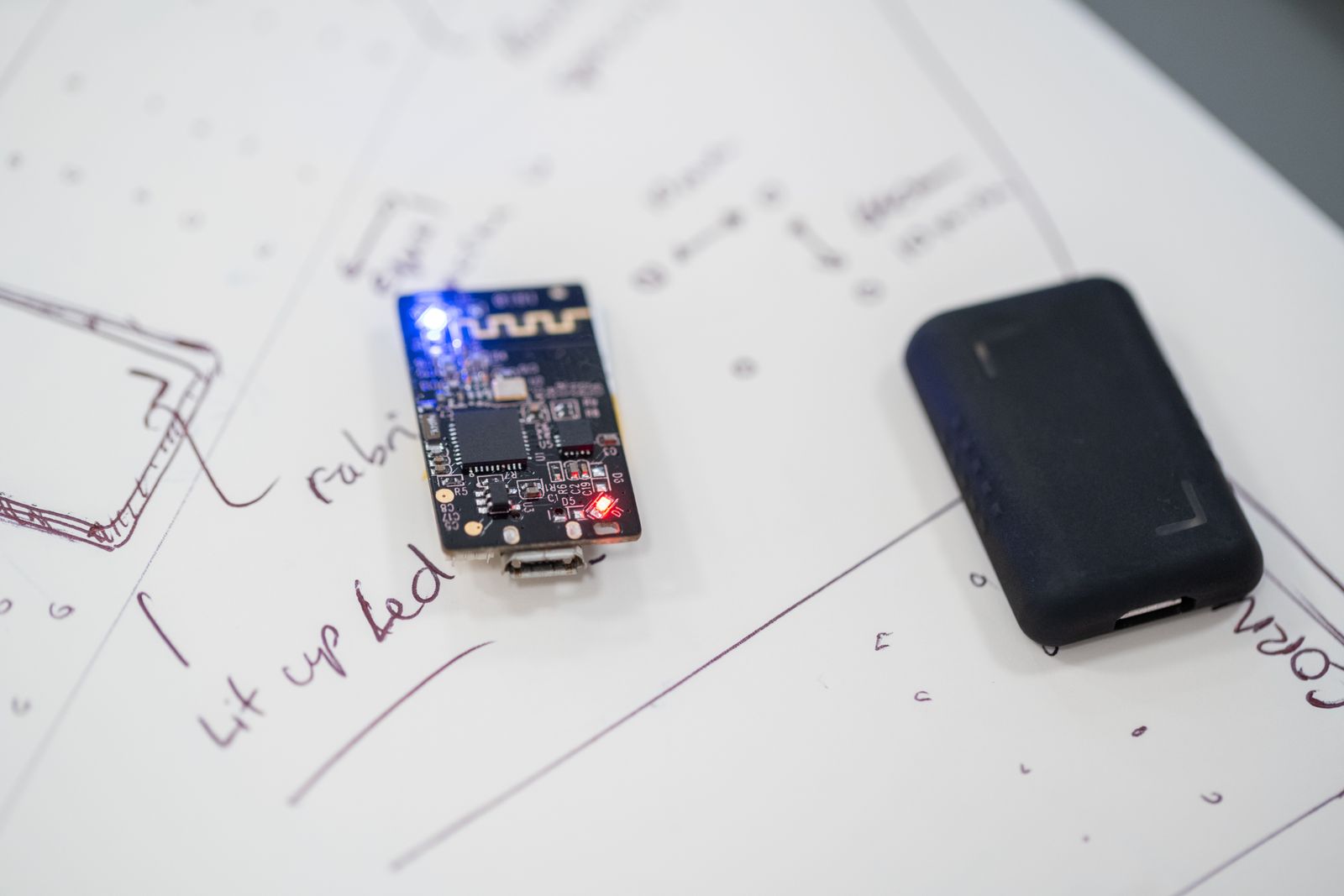
Gen4 Shelly devices carry a multi-protocol chip with Wi-Fi, Bluetooth and an IEEE 802.15.4 radio. Today that last radio is used for Zigbee mode. ThreadLink would use it to join a Thread mesh instead, and here is the twist: it is not just “Matter over Thread”. Shelly says it runs a full IP stack on the Thread link (IPv6 with 6LoWPAN, UDP, and TCP), so one radio can carry three things at once: Matter for your ecosystem, Shelly’s own local RPC API for device-to-device scenes and interlocks, and the Shelly Cloud connection.
The cloud part works without Wi-Fi credentials stored on the device, via NAT64 translation at a Thread border router. I do not use the Shelly cloud, so that is not my headline feature, but the other two are. Local device-to-device logic that keeps running when the router is down is exactly what I want from a light switch.
Why a local-first person should care
My Wi-Fi network carries a lot of small, chatty clients, and every relay I add is one more. Moving them onto a low-power mesh would free those slots and, in theory, make the house less dependent on one access point. I wrote recently about why I want separate radios for Zigbee and Thread, and ThreadLink fits that way of thinking: the Shelly does its own radio work, and my coordinator stays a coordinator.
It also keeps the escape hatch open. It is per-device and opt-in, so a relay can stay on the standard Wi-Fi firmware if I decide the mesh is not worth it. Nothing forces a migration.
What is still unknown
This is where I slow down. The honest list, as of today:
No release date. Shelly said roughly three months after the announcement, which points toward early December, but no firm date has been given. No eligible-model list. The announcement says “eligible Gen4 devices” and names none. Gen3, Gen2 Plus, BLU and Wave are not mentioned at all. No measured numbers. The reliability and latency claims are Shelly’s own and I have not seen independent testing, which is understandable for software that has not shipped.
There is also an older wrinkle worth knowing about. Back in July, German outlet SmarthomeAssistent reported that Shelly would bring Matter over Thread to the Gen4 line, and noted that flash memory on these devices is tight, which is why a separate firmware was planned rather than one image doing everything. That reporting was thinner on sourcing than I like, but ThreadLink looks like the official form of that plan, and the flash constraint is a good reminder to check which features survive the switch, local scripting above all.
The Home Assistant side
Two paths, one real and one promised. The Matter path should work the way Matter devices already do in Home Assistant: you need a Thread border router and the Matter Server app. Matter is multi-fabric, so the same device could sit in Home Assistant and another ecosystem at the same time. The promised path is a dedicated Shelly module that exposes the full feature set beyond what the Matter data model covers. Shelly has said it is coming; nobody has said what it looks like. Home Assistant’s current Shelly integration supports all four Shelly generations over local push, and I would want that kind of depth before moving anything critical.
The border router requirement is the practical gate. Cloud access and app control need one on your network; device-to-device scenes run inside the mesh without it. Home Assistant can use any Thread border router but can only configure OpenThread ones. If you do not have one yet, Local Smart Home Guide notes that the older Yellow and Connect ZBT-1 are discontinued and recommends the ZBT-2 for new purchases. That matches what I concluded in my own coordinator shopping.
What I am doing about it
Nothing yet, deliberately. I am not buying hardware for a firmware that has no date. My Wi-Fi relays are reliable, and the bar for replacing something that works is high. The plan is simple: wait for the eligible-model list, wait for the firmware, then move one low-stakes relay, watch it for a few weeks, and write down what happens, including the ugly parts.
If you already own Gen4 devices and have a border router, you are in a good position to wait. If you do not, do not buy for ThreadLink. A radio profile is one at a time on these chips (Wi-Fi, Zigbee or Thread), so you will be choosing one, and I would rather choose with real-world reports in hand. I will update this when the firmware lands.
Sources: Shelly, ThreadLink announcement; Local Smart Home Guide, ThreadLink explained; SmarthomeAssistent, July report on Gen4 and Thread.